How Extended Reality Tactics Can Benefit Your Marketing Strategy
Can't upgrade to 2022? Find all meetings in our library of questions! Look here.
Many marketers feel a little frazzled by the promises of the metaverse. Take virtual real estate, which should be a safe bet, an investment that is sure to pay off. Now that real estate in the metaverse has lost 85% of its value, the marketers left behind feel like they've fired a bullet.
Spending over $900,000 on Decentraland real estate might be a little overdue, but make no mistake: the Metaverse is coming and it will be the engine of the global economy. McKinsey & Co estimates that the price could top $5 trillion in the next seven to eight years. This is in the near future. It's time for every marketer to start experimenting with Metaverse and the possibilities it offers.
One of the problems that marketers face is that the overall concept of the metaverse is vague. What is it and does it serve any purpose other than providing a platform for cool games and avatars to visit virtual outlets and buy virtual luxury clothes?
Time is running out, to be honest. Here is an example we can all refer to to understand urgency. Companies have been ordered to send workers home when Covid-19 kicks in. People who have used digital tools like Microsoft Teams or Slack have made the transition easier. Those whose corporate culture requires face-to-face communication are doomed. In other words, people who have used digital devices are ready for the new reality that has been forced on them. Your preparation has paid off.
The same goes for marketers experimenting with trends like the Augmented Reality Metaverse. In addition, you can experiment without investing in virtual real estate, creating NFTs, or issuing new cryptocurrencies. If you're a marketer, your biggest game right now is the 3D assets your company creates on the computer while developing new products.
The role of augmented reality and 3D resources in solving marketing problems
Any company that uses computers to create products has 3D assets within the organization, mostly located on local disk storage. Instead of leaving them there, marketers should start exploring new ways to use them in sales and marketing. This is a recipe for being in the 3D Metaverse, and the challenge is to develop the skills and resources needed to create and deploy those resources in business cases.
During the pandemic, Coast Plus World Market (a RightPoint client) launched a virtual holiday store inspired by online games. Instead of clicking menus to find photos of discounted items, shoppers wandered the aisles and discovered interesting new products. Although it was intended as a way out of the recession, its real importance to the international market has forced the company to rethink what it means to operate in a world that is inherently three-dimensional and do digital business.
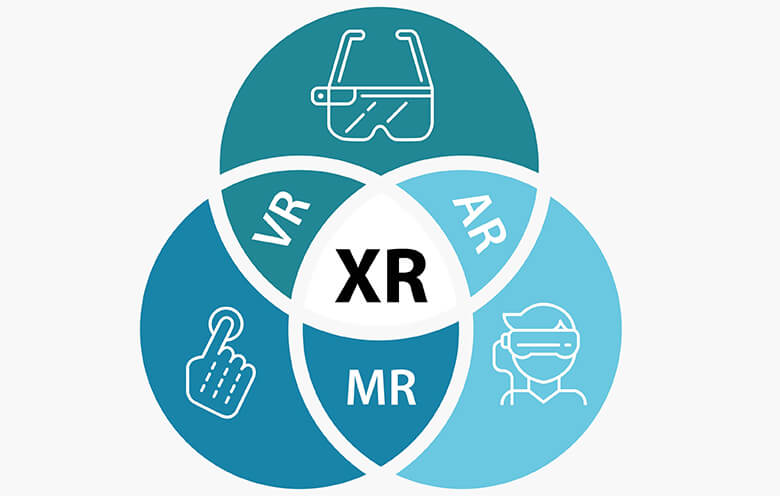
Augmented reality is the basis of 3D marketing. It is a combination of several different types of digital reality, each of which ultimately promotes a familiar 3D environment.
In a 2D world, users interact with the screen with their thumb or mouse and scroll through menus. 3D adds depth: How does this content, whether it's a sweater or a water cooler filter, relate to your body type or height? For example, in a spatially sensitive environment, the user presses a sweater against their chest to feel the length, which fundamentally changes their relationship with the content.
The virtual experience is equal to the physical.
A spatially significant environment opens up a world of opportunity for businesses of all sizes. We are currently working with an insulation company that only manufactures physical products. How does this company use virtual products? You may be interested. The company wants to make the plants visible to its customers so they can see firsthand all the details of defense production. Instead of taking each customer to the factory, they offer a 3D factory tour that allows people to look around and explore different aspects of the factory. The company added another set of tools to its 3D factory and used it to train new employees.
Consider what this means for people with mobility issues that prevent them from safely moving around physical locations. Companies can create virtual experiences that are comparable to physical ones, especially with the introduction of new devices to the market, such as improved headsets with noise isolation and the ability to simulate touch.
This changes things. Last December, Boeing announced plans to integrate design, manufacturing and airline services into a single digital environment. Fully immersive 3D engineering projects combined with interacting robots and mechanics connected via Microsoft HoloLens headsets. The goal is to put engineers into virtual aircraft so they can identify and fix potential problems during the design phase.
From allowing customers to share their contact information to allowing a brand to create appropriate shopping paths, 3D assets can solve some of the privacy concerns of marketers. It's understandable that consumers don't want to share their email and mobile data with brands, but that could change if they get a stunning 3D experience in return. Do I need to provide my email address if it means a 3D ride in a BMW X1 series? You can bet that I can. And this experience puts BMW on the list of new cars to buy.
3 steps to get started with 3D and market realities
The first step is to think about how you can help users with your 3D content. For example, you can use augmented reality to see when consumers are calling about a defective product.
Then define your company's asset portfolio and determine how those assets will be used in the 3D world. For many organizations, this is a significant expense, especially if your data library is owned by a third party or distributed internally. You may need to work with a partner to help you integrate these assets into your client or employee environment, but it's worth it.
Finally, start experimenting. See what companies like Boeing, Maytag and Cost Plus are doing for inspiration. Once you've thought about the property pipeline, you'll have a lot of interesting use cases. With platforms like Gazer, you can host virtual meetings in the Metaverse to interact with customers in new and interesting ways.
These are not issues for future use. This is what real companies do today and will determine how we do business in the future.
Jonathan Dominguez, Digital Product Development Manager at Rightpoint , is passionate about digital product development and immersive experiences across 3D, VR, AR and MR platforms.
Data decision maker
Welcome to the VentureBeat community!
DataDecisionMakers is a place where professionals, including data engineers, share their knowledge and innovation.
Join us at DataDecisionMakers to learn more about the latest insights and insights, best practices, and the future of data and data processing technologies.
Maybe you should consider writing your own article!
Learn more about DataDecisionmakers


Comments
Post a Comment