A New Marketing Phase Is Resulting In Empty But Effective Advertising
This week we have a beautiful new video ad for Belvedere
We're zooming in on Daniel Craig's blonde profile. The former 007 wears a white suit. Standing on the Pont Neuf. He looks at the water without touching it. He turned slowly, set his eyes on the camera and looked down the barrel. It was a moment when he could have said so much, but a second later he was gone excitedly.
Craig got into a Rolls-Royce and got out again. He's going... wait. Why do I care what happens next? You've already seen it. And if you don't have it, you will in the next 24 hours. Advertising is everywhere. Marketing Week column in print in online news. It did what very good advertising does: It went culturally mainstream in a matter of hours.
But what does advertising actually mean? What is this first look? What about the weird dance? Jacket from the 80s? DC jewels? And what does that say about Belvedere? What is the connection between Paris and the brand? Between brands and celebrities? Does Daniel Craig Belvedere drink in real life? Does the consumer care that you've promoted so many drinks in your past as a celebrity? Why does it end like this?
The answer to that age-old question is the same: it doesn't matter.
It's a prediction made nearly a quarter-century into the new millennium and more than 30 years after David Aker published Managing Brand Equity. It perfectly represents the current environment.
It's an enticing, enticing, very pretty piece of nowhere. It's about indicators. Not only is it lacking any meaning, it wasn't meant to mean anything at all. Director Taika Waititi, the king of pure semiosis, knows exactly what he's doing. This is generally the fourth stage of the Baudrillard simulation: out of touch with reality. Singing with Rita Ora.
However, do not confuse this with bad advertising. Or that doesn't sell vodka. There is no criticism. Just because a prediction isn't important doesn't mean it won't make an impact, quite the opposite in 2022.
We live in a time when the pursuit of meaning is relative, contested, and controversial. Nobody knows what anything means. We also live in an age where presence, notoriety and short attention spans are top marketing priorities. With so many voices screaming at once, it's a performance worth hearing a single sentence from.
Belvedere will bring people Christmas because it made people think about Belvedere without a semantic end goal. Not necessarily deep thinking. But an indication of cognitive activity. And here's the catch. Achieving this overarching goal is easy for Belvedere because its advertising has no underlying meaning or attempt at objective meaning. To scare the audience and the 21st century. The freedom to play in the empty reference space of early 20th century culture enabled him to strike such a powerful and pure tone with audiences.
We are witnessing a new marketing moment where money and authenticity are traded for looks and attention. It might not last forever, but it's an option for now.
Brand theory has changed a lot in the last 30 years. Partly due to a changing and fragmented media market. But we also know that brands can have an impact on consumers. To sum up great literature in one sentence, it is more about role than image. Bring the brand to mind in the best way possible and in the most positive way, and you will grow.
Now reverse that logic. Because it tells the trader not to worry about position, number or depth to start with. For Belvedere, which operates in a category that's the definition of empty, it's easy.
Vodka is a drink that can be made from literally anything, and it smells and tastes like nothing else. The ultimate hyperreality drink. Anyone who tells you they have a "vodka of choice" is wrongly writing "I don't know" on their forehead.
But this image battle applies to all categories -- B2B, B2C, services, SaaS, and SMB -- and to a much larger extent than most marketers realize. Partly because there is no film without a hero. Partly because we overestimate image and underestimate the role of a marketing generation.
BrewDog takes center stage above everything else
Brewdog masters know everything. And I've known that for years. Alcoholism has two basic forces. First, and this is what most marketers overlook, because your rectal cavity is so tall, BrewDog makes beer that tastes better. Second, it strives for continuous brand awareness mainly through repeated stunts, tricks and other efforts.
Each lacks meaning, authenticity, and often appreciation. But each maintains the brand's position in the uncertain spirit of the beer-drinking mass market until the next empty chapel is invented. Tactics flare up and burn again, just as real embers cool and constantly recharge brand awareness.
BrewDog labels its beers after drugs, guns and dead pets. It claims to be the planet's favorite beer without precision, qualms or restraint. A contest offered 10 gold beer cans with no solid gold beer can awarded. To right this "wrong," the brewery has created a new competition, this time with a chance to win another diamond-encrusted can of lager. Nobody has appeared yet. The brand's ads make liberal use of giant 70-foot billboards that simply read your bitch and "advertisement."
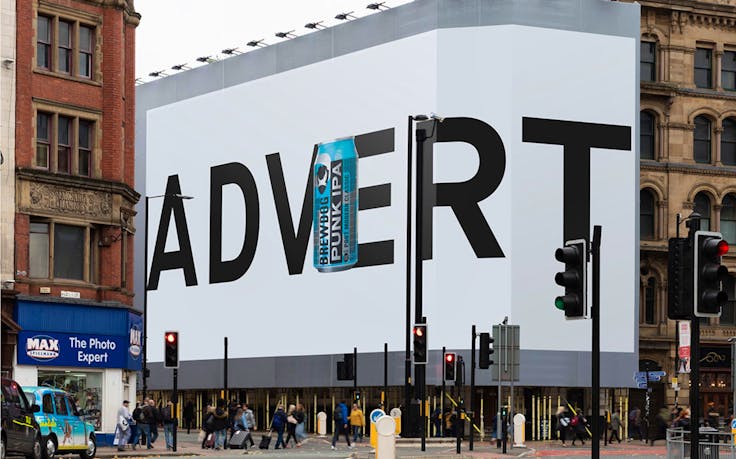
Perhaps this recent colossal ad blunder is representative of BrewDog's approach and current tally of successful 21st century ads. Nothing is more meaningful than celebrating your lack. But this simple message catches the eye and draws attention to the brand.
It is a lustrous material and is commercially useful. Name another brewery whose sales will increase by 31% in 2021? And is it likely to do the same this year? BrewDog's success mocks the marketing industry's criticism of its approach.
And the success and criticism will continue. An army of retailers are lining up for BrewDog's latest wild venture. The new ad criticizes the World Cup in Qatar and promotes a new Lost Leger protesting the biggest soccer tournament hosted by the world's most regressive regime. If you listen to marketing, this campaign will backfire due to the mismatch between the new campaign and the brand's business operations.
Still the brand is exported to Qatar, I got you! The brewery will continue to broadcast World Cup games live at all venues, dammit! Brewdog accuses Qatar of killing contractors after their workers claim they work in 'culture of fear' - hypocritical bastards! burn them! burn them!
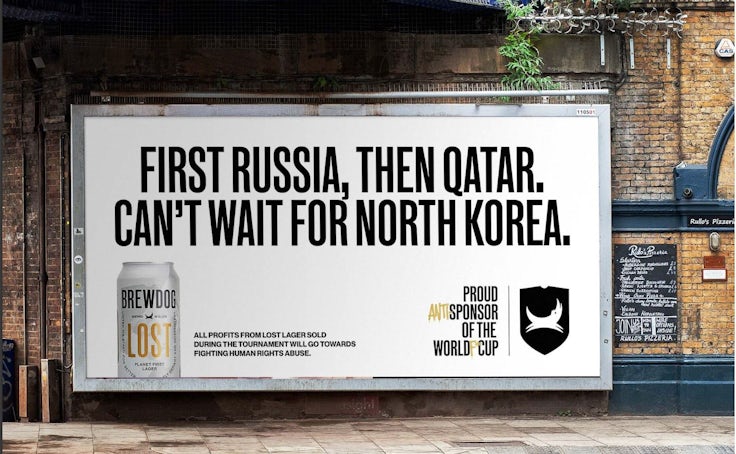 Marketers and the marketing press miss the point. Because it doesn't make sense. Brewdog can't be fired for the apparent inconsistency between what the company says and what it does while not addressing the vulnerability in question. Also the beer crowd who like their beer cool and free from the nonsense of the modern marketing department. And both of those events are commemorated when BrewDog appears outside on billboards, in angry news stories, or in press coverage of government bans. Your marketing works. Better than most.
let's be honest Most marketers try hard to appear cool and fair, even though this attitude contradicts their professional requirements for market orientation and market knowledge. Most marketers read that co-founder James Watt had screwed employees, and that meant BrewDog's marketing would be publicly criticized and instant failure guaranteed.
Maybe Watt was a bad boss. It will never end. But it's huge brand building and our industry needs to be able to keep two conflicting ideas in mind at the same time. We're not the damn Church of England. If it's good marketing, we have to say it's good marketing.
It's good marketing.
This is an important observation, not just because we have to respect Brewdog, but because we respect the brand for being at the forefront of the most effective and simplest advertising. We are witnessing a new marketing moment where money and authenticity are traded for looks and attention. It might not last forever, but it's an option for now.
Embrace the emptiness
Unfortunately, many brand managers are limited in their ability to create meaningful differentiation because of their cowardly attraction to assured conformity, their overemphasis on consumer life, and their innate desire to position themselves on brand norms. . They must be released. Take off your shirt and immerse yourself in the everyday smell of consumer reality. Trade in dozens of aged casks of authenticity, character and depth for a few glasses of precious attention.
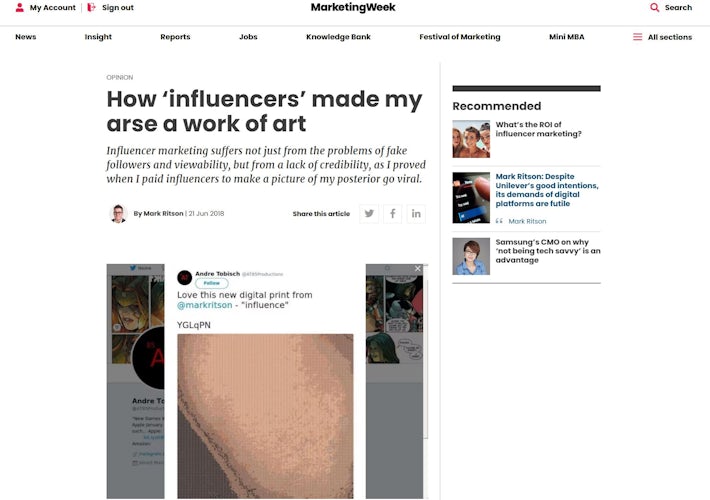
Believe that. You're reading about a "businessman" who once wrote a column about his butt. And then he won a PPA award for it. No spine in her ass.
I still believe that brand image plays a role in purchasing and price sensitivity. But the valence between awareness-raising and brand-focused associations does not lean toward the latter. Those days ended around the year 2005.
No matter how hard marketing Twitter tries to create unexpected moments for BrewDog online, it will only be successful by engaging with the market and marketing itself. The second shoe will not fall under the BrewDog brand. He leans on the bar while his owner drinks a pint of Dead Pony Club.
The game is pure character. That's partly because it's a good strategic choice for a world without information and money, partly because a jaded post-Covid consumer has searched for his soul enough in a decade, and partly because marketers now realize that this is more important than ever. . Whoever first thought what came partly from the reptilian part of the brain will be rationalized (I'm paraphrasing here) by the ape part to complete the purchase.
Modern marketing is still about symbolism. But the focus shifts from the significant signifier to the brutal awareness of arbitrary signifiers and the ability to bring brands of awareness into the moment. A dancing Daniel Craig means nothing, but he'll sell a ton of vodka. BrewDog's rejection of Qatar 2022 is a hollow, incoherent and highly ineffective move. My butt will live forever as a totem in the annals of Marketing Week because of my serious lack of intelligence.
"Smile," Baudrillard once wrote in his masterpiece America, "and others will laugh." Smile to show how transparent, how honest you are. Smile when you have nothing to say. Above all, don't hide the fact that you have nothing to say or are completely indifferent to others. Let that emptiness, that deep indifference, shine naturally in your smile.
Mark Ritson teaches balancing image and awareness in the Marketing Mini-MBA course and is a four-time winner of the PPA Columnist of the Year Award for articles that don't always include his anatomy.


Comments
Post a Comment